
Introduction
Digital marketing isn’t optional anymore. It’s the backbone of pretty much every successful business today, whether you’re running a small local shop or managing a global brand. Algorithms keep changing, more people are searching on mobile and through AI powered tools, and competition keeps getting tougher. If your business isn’t adapting its digital marketing approach, you’re going to fall behind sooner or later.
In this guide, we’ll walk through 10 strategies you can start using right away to get more visibility, attract the right kind of traffic, and grow your revenue in 2026.
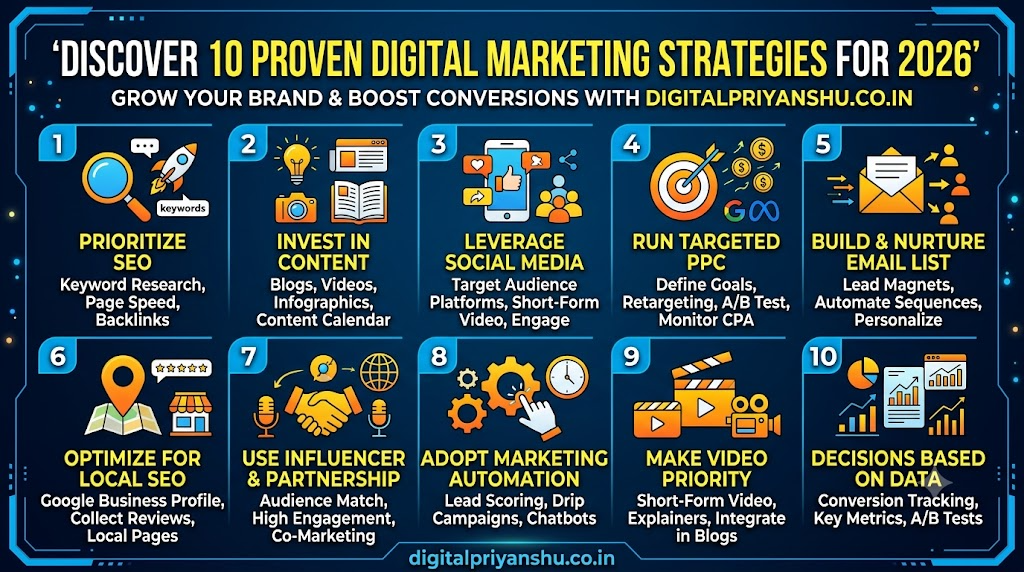
1. Prioritize Search Engine Optimization (SEO)
SEO is still one of the best returns you can get from any marketing channel, simply because it reaches people who are already searching for what you offer. Here’s how to improve your rankings:
- Do proper keyword research so you’re targeting terms with real intent and manageable competition
- Optimize your on page elements, things like title tags, meta descriptions, header structure, and internal links
- Work on your page speed and Core Web Vitals
- Earn quality backlinks from relevant, trustworthy websites
- Write content that genuinely answers what people are searching for
A solid SEO foundation pays off over time. It keeps bringing in organic traffic long after you’ve stopped actively promoting a piece of content, without needing constant ad spend.
2. Invest in Content Marketing
Content is what powers your SEO, your social media, and your email marketing. When you consistently publish useful content, you build trust and become a go to source in your niche.
- Write blog posts that actually solve problems your customers are facing
- Repurpose your longer content into videos, infographics, and social posts
- Keep a content calendar so you’re publishing consistently
- Focus on evergreen topics that keep pulling in traffic long after they go live
3. Leverage Social Media Marketing
Your audience is spending hours a day on social platforms, so it makes sense to meet them there. A focused strategy helps you build awareness and a real community around your brand.
- Pick the platforms where your target audience actually spends time, rather than trying to be everywhere
- Mix up your content between educational, promotional, and just plain engaging posts
- Use short form video like Reels and Shorts to get more reach
- Actually engage with comments and messages instead of just posting and disappearing
4. Run Targeted Pay Per Click (PPC) Advertising
SEO is a long game, but PPC gets you visibility right now. Platforms like Google Ads and Meta Ads let you target people based on intent, demographics, and behavior.
- Start with a clear goal in mind, whether that’s leads, sales, or just brand awareness
- Use retargeting to bring back visitors who didn’t convert the first time
- Test your ad creatives and landing pages regularly instead of setting and forgetting
- Keep a close eye on your cost per acquisition so your ad spend stays profitable
5. Build and Nurture an Email List
Email marketing still delivers one of the highest returns of any channel, and the big reason is that you actually own your list. No algorithm update can take that away from you.
- Offer something valuable, like an ebook, checklist, or discount, to get people to sign up
- Segment your subscribers based on their behavior and interests
- Set up automated welcome sequences, abandoned cart emails, and nurture flows
- Personalize your subject lines and content to boost open rates
6. Optimize for Local SEO
If your business serves a specific city or region, local SEO is essential for showing up when nearby customers are searching for what you offer.
- Claim your Google Business Profile and fill it out completely
- Ask for reviews and respond to the ones you get
- Keep your business name, address, and phone number consistent across every listing online
- Build separate location pages if you serve more than one area
7. Use Influencer and Partnership Marketing
Working with influencers or brands that complement yours is a great way to tap into an audience that already trusts them.
- Choose influencers whose followers actually match your target customer
- Care more about engagement rate than raw follower numbers
- Look into co marketing opportunities with brands that aren’t your direct competitors
8. Adopt Marketing Automation
Automation saves you time and makes sure no lead slips through the cracks.
- Use lead scoring so your sales team focuses on the right people first
- Set up drip campaigns triggered by what users actually do
- Add chatbots to qualify leads and answer common questions instantly
9. Make Video Marketing a Priority
Video just performs better than most other formats when it comes to engagement and how long people stick around.
- Create short form videos for your social channels
- Add explainer videos to your landing pages to help boost conversions
- Include video in your blog posts, since it tends to increase time on page, which is a good signal for SEO
10. Make Decisions Based on Data and Analytics
None of the strategies above will work well if you’re not tracking results and adjusting based on what you learn.
- Set up conversion tracking in Google Analytics and across your ad platforms
- Check your key metrics weekly, things like traffic, bounce rate, conversion rate, and customer acquisition cost
- Run A/B tests regularly on your landing pages, emails, and ads
- Use what you learn to put more into what’s working and cut what isn’t
Conclusion
Getting real results from digital marketing in 2026 comes down to combining these strategies into one cohesive plan, rather than betting everything on a single channel. Start by building a strong SEO and content foundation, add paid and social channels to speed up growth, and let your data guide you as you refine things along the way.
Ready to grow your online presence? Get in touch and let’s build a digital marketing strategy that actually fits your business goals.
Frequently Asked Questions
Q: What is the most effective digital marketing strategy for small businesses? A: SEO and local SEO tend to offer the best long term return for small businesses because they bring in high intent customers without ongoing ad costs.
Q: How long does it take to see results from digital marketing? A: SEO and content marketing usually take around 3 to 6 months to really show results, while PPC and social ads can start driving traffic within just a few days.
Q: Should I focus on SEO or paid ads first? A: Most businesses do best running both at the same time, paid ads for quick traffic and SEO for steady, long term growth.
Hi, this is a comment.
To get started with moderating, editing, and deleting comments, please visit the Comments screen in the dashboard.
Commenter avatars come from Gravatar.